What a Surprise!

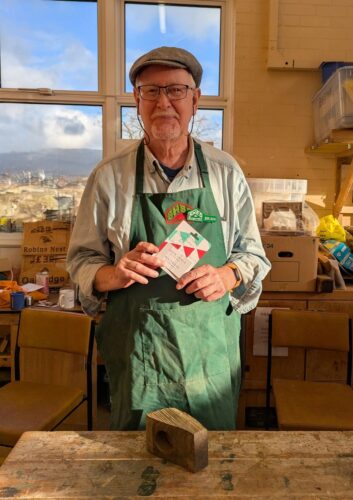
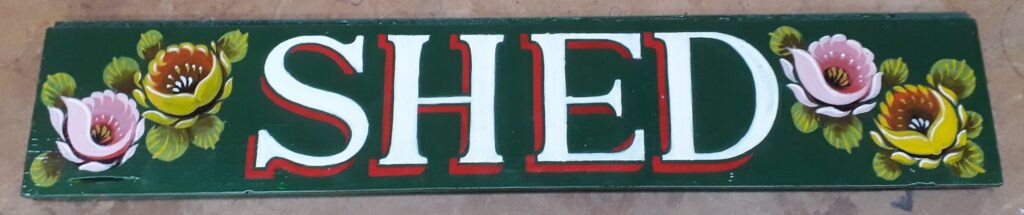
You never know what will turn up in the Shed – this week a lovely surprise from Heather who is a canal boat artist. What a beautiful sign, can’t wait to show it off at our next event. Many thanks Heather.
Read moreCommunity Craft Workshop in Burgess Hill and Mid Sussex

You never know what will turn up in the Shed – this week a lovely surprise from Heather who is a canal boat artist. What a beautiful sign, can’t wait to show it off at our next event. Many thanks Heather.
Read more

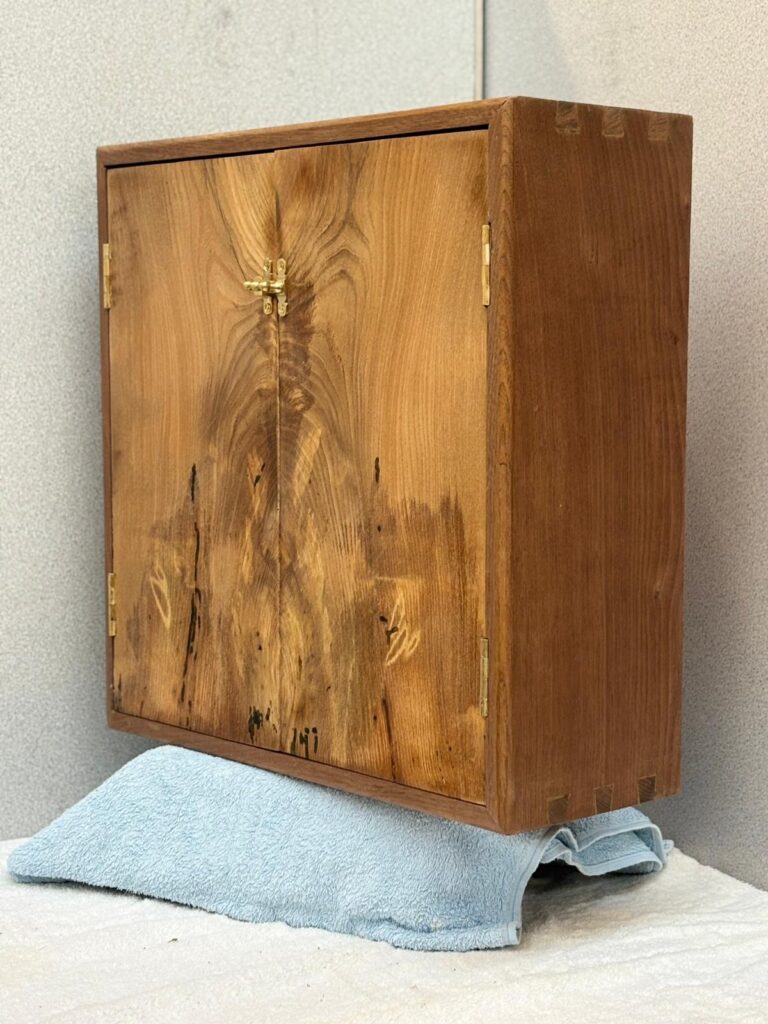
Brian skilfully made this cabinet from donated wood because he particularly liked the grain effects on the doors. The top, bottom and sides were all joined using dovetails to give a strong and neat appearance. Lovely job!
Read more
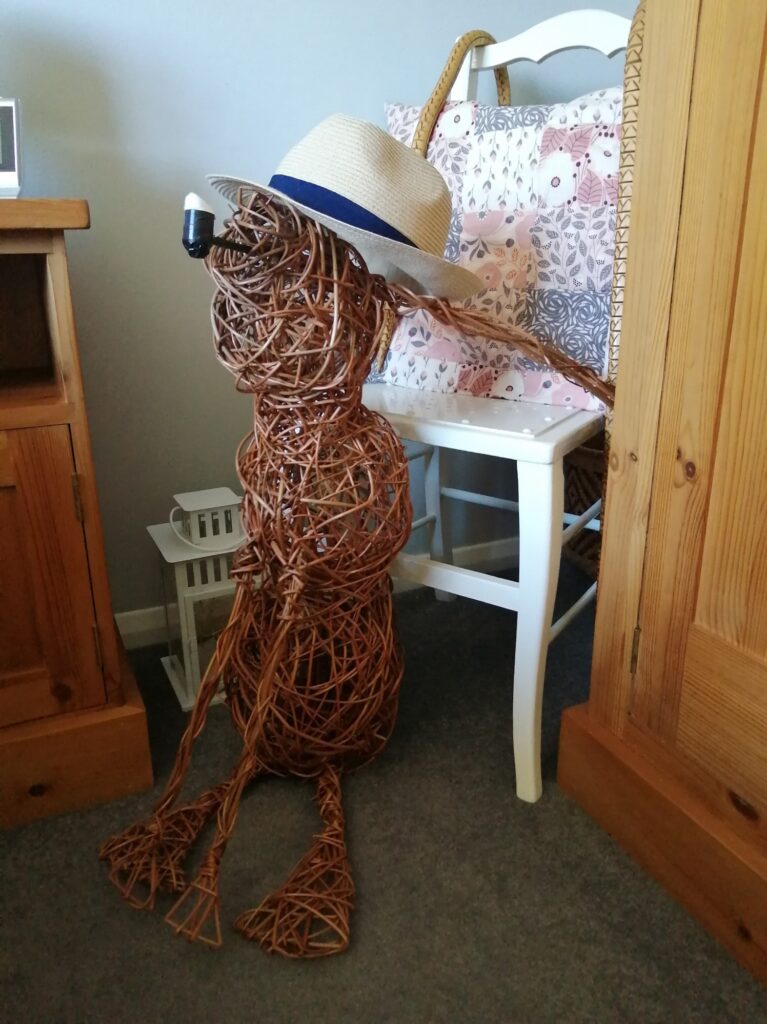
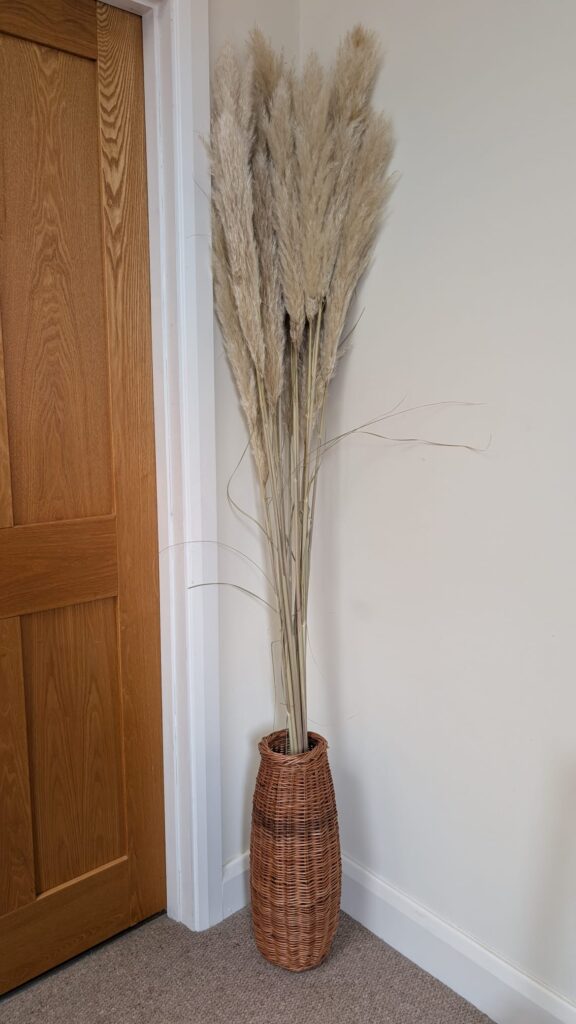
Lorraine’s latest willow work. Looks a great trend setter doesn’t it.
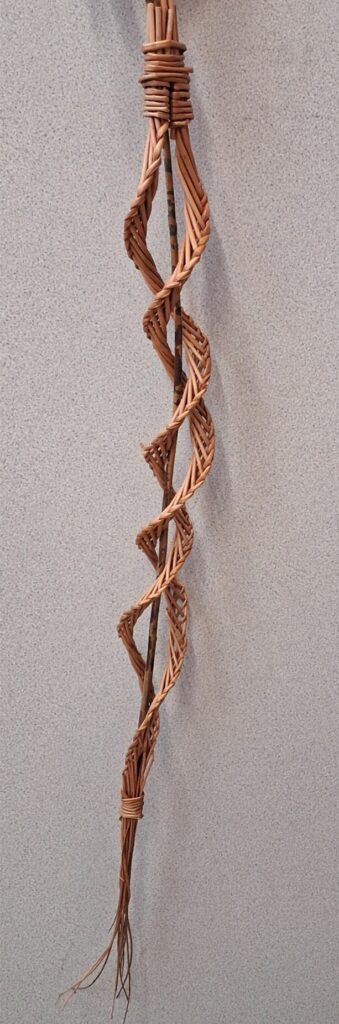
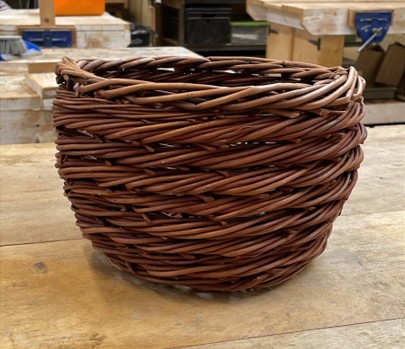
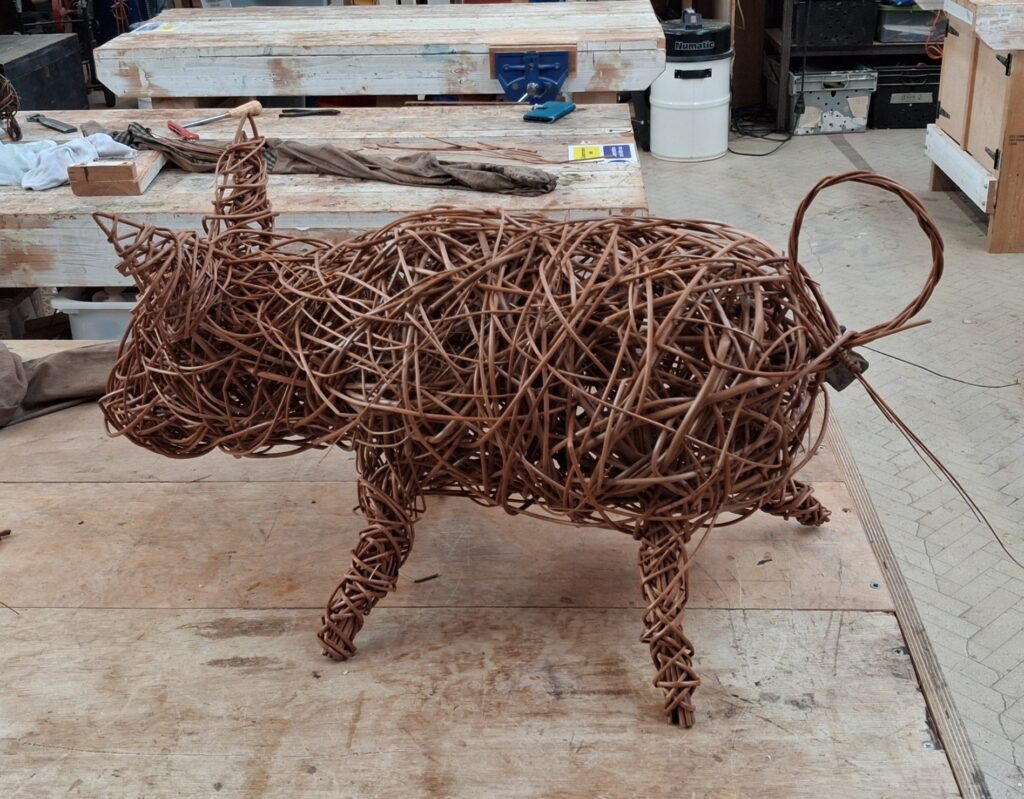
Over the past year or so, our willow weavers have made great strides and create lovely, original products.
Anyone is welcome to join the group, every Friday in the workshop, 9.30 to 12.30.
Folk art is a general term used for handcrafted objects made within a community’s everyday life, often reflecting local traditions and used to decorate products. It is mainly done by self-taught artists who develop skills within the community and our Shed is an ideal place to practice these skills.
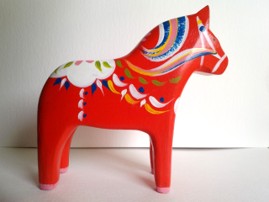
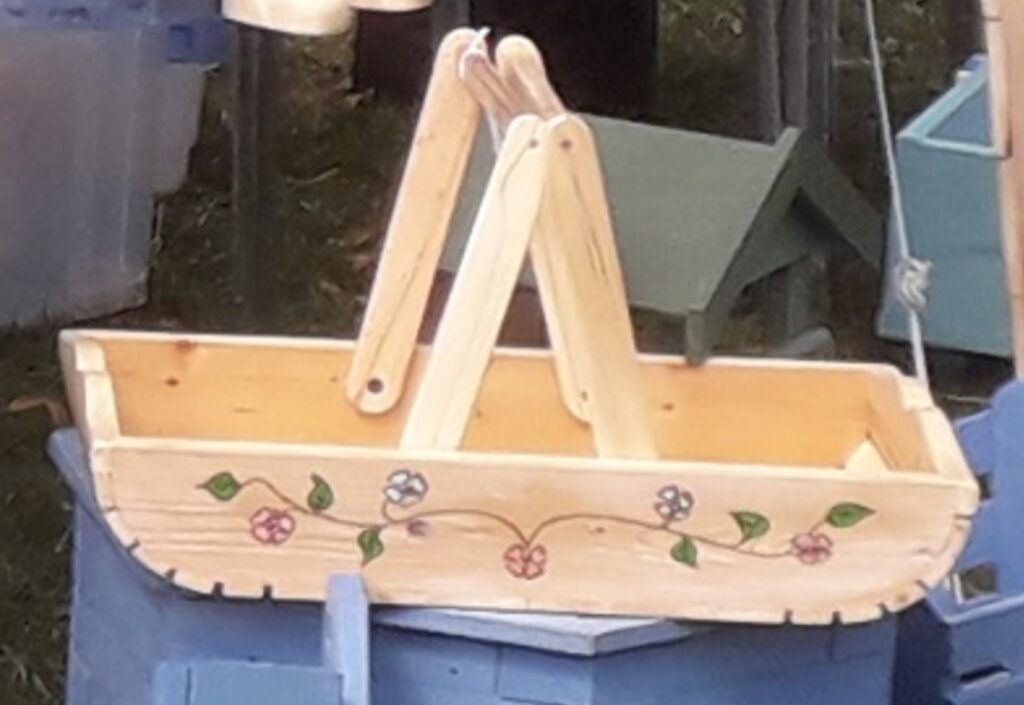
Folk Art covers many of the activities currently done during Shed sessions such as willow weaving, wood carving, turning, scroll saw work, pyrography and products decorated by hand painting. Many folk-art products are everyday items embellished with floral, natural and abstract themes. Products can include furniture, chopping boards, coasters, clocks, garden things. Recent examples include coasters depicting local scenes, garden trugs, owl toilet roll holders and very recently, Dala style horses.


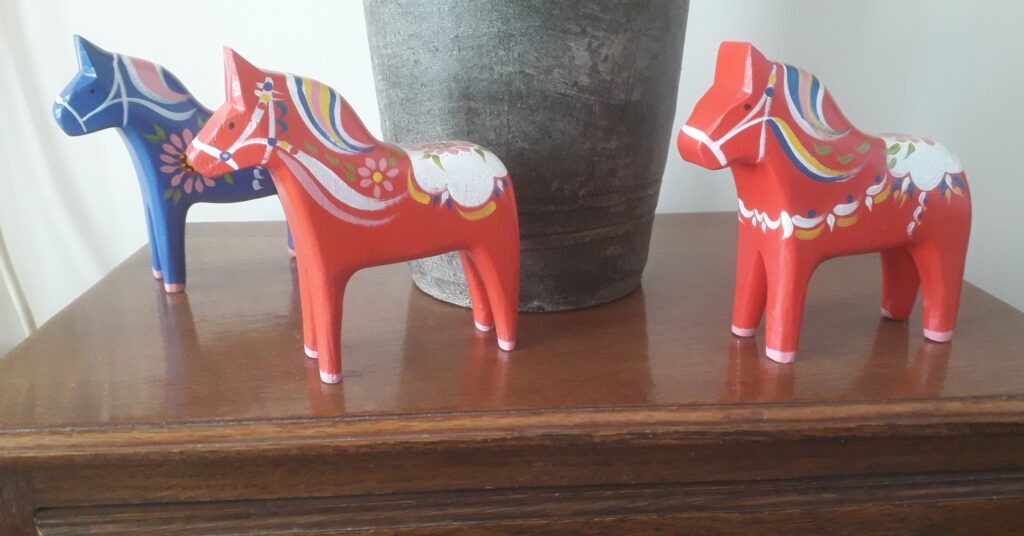
Often these products require members to work together. For example, our Dala horses were first carved by members and then hand painted by Heather, a canal boat artist.
We are … Read more..
Read more
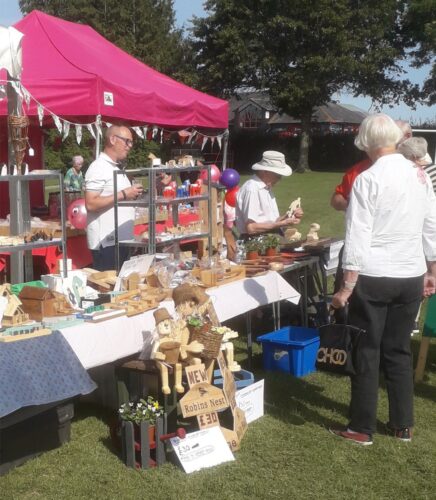
For the first time we were at Albourne Village Show to meet the public, promote and sell new products to raise funds. The main attraction was Dennis our oldest member who received much interest whilst demonstrating his wonderful skills by carving a Welsh wooden love spoon.
The Village Show was a great way to get to know Albourne and its lovely people. We all enjoyed the lively day and indeed the whole experience. Our thanks to Albourne for the warm welcome and to all the volunteers that made this special day happen.
Read more
In the 18th century Swedish province of Dalarna, foresters roughly carved wooden horses during breaks. They would take them to the village where carvers would complete them before others painted them in elaborate colours and floral patterns, a technique called Kurbits. It became a traditional cottage industry that still exists today, and these treasured horses are still popular today as gifts for toys and for décor. These BH-Shed versions made by Eric in oak were hand painted by Heather who is also a canal boat artist. The base coats are a special child safe paint from Finland and the patterns are a special paint used in canal boat art.
Read moreAs mentioned on Tuesday could I please remind members that if you use hardwood or large amounts of other timber, other than when projects are for the shed you are supposed to make a donation to the shed.
Whilst the wood is in the main free it still has a cost attached to it.
You are not required to pay what the wood would cost but the donations help with the costs of obtaining wood.
From Peter G
Read more
Tim asked us to repair his old bench and move the arms a little higher. We really hate to scrap anything, but on close inspection it was clear the rot had set in. Alas, it was beyond repair. Instead we offered to make him a new one with arms tailored to his needs. He did a trial fitting – you can often do that with our products, and was very pleased. Now he has a sturdy bench that’s just the job and will last a good while.


Fun in the garden. This little feller Howard, his brother Henry and sisters Lilibet and Mabel were big sellers at the Fayre. They hold a 4 inch flower pot.
Read more

Mick made this table from scrap and recycled wood. The top was assembled with biscuit joints and the legs with mortice and tenons. The herringbone top effect was made using pocket screws. It took him 3 weeks to make and he finished it in a sage colour preserver.
Lovely job Mick.

Great day. Lots of people, lots of sales, lots of interest. Many thanks to everyone who helped with prep, products and day.
Read more
Dennis saw an African primitive style statuette in our St Peter & St James charity shop and thought: ‘Now there’s a carving challenge!’
From a suitably sized Ash log, Dennis turned, drilled and chiselled the wood to create this intertwined figurine. He then sanded and stained it to give a rustic effect to complete this intriguing three-month project.
What made it particularly challenging is that it is carved from a single piece of wood, the figures are completely separate and whilst totally interlocked can be opened to provide a handy stand. It’s simply amazing Dennis!


Lee who joined recently, made his first products for the Shed, learning scroll saw, band saw and pyrography skills along the way. He said: ‘For me making these cars has given so much joy. While I was making them my thoughts would wonder to hoping they will each find a home where they are able to emit the love and joy that went into their being.’ Well they will certainly make pole for our first events this year.
Read more
Early blooms – lovely willow sunflowers made by Sally in the workshop bring Barry’s trellis to life whilst the climbers get going.
Read more


This lovely cake stand has been sympathetically restored to near original condition. The project involved making missing parts, repairing damaged ones and restoring surfaces. In complete working order it has four hand-carved, leaf patterned plate trays which fold down for storage: a great centre piece for any afternoon tea party. Each tray can hold plates up to 8 inches (20cm) . If anyone is interested in this stand or would like something similar, please let us know.


These lovely practice pieces were created by Belinda in one session using the reduction method. Pioneered by Picasso, colour can be easily added to bring prints to life. Sessions run every Friday in the workshop between 9.30 and 12.30.
Read more
This picture is called ‘Jacqueline with Glossy Hair’, by Pablo Picasso and master printer Hidalgo Arnéra (1992) using the reduction linocut technique. In a series of steps, print areas in the same colour are carved away before a print of the colour is taken. The process is repeated with another colour printed on top of the previous print, then repeated for every colour until the complete picture emerges.
I created a copy in order to learn the technique after watching a video by Christina Taylor, a Conservator at the Harvard Art Museum (https://www.youtube.com/watch?v=bg6FowI4h8o)
My copy is less clear and the print less even than Picasso’s. This is because I used a very small size (6 x4 inches) whereas the original is over 7 times this size. Larger sizes allow finer cuts and accuracy of registration which is important when using the reduction technique. I used acrylics for speed, … Read more..
Read more